
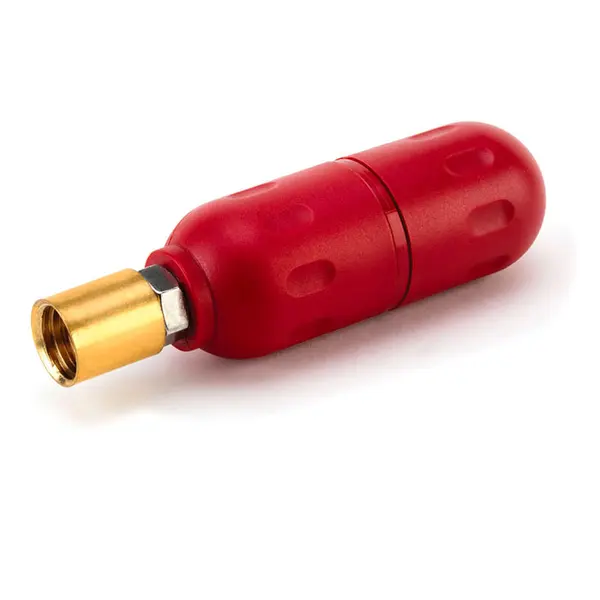
C.Scope YIRS-640 640 Hz Metal Pipe Sonde
Locate a suspected blockage or another point inside a metal pipe with the C.Scope YIRS-640. This new sonde transmits at 640 Hz and comes with an H2397 M10 sonde adaptor. Before ordering, check that your locator can detect a 640 Hz sonde and that the assembled fitting can pass through the pipe.
What's in the Box
Pinpoint a feature inside a metal pipe
The locator detects the sonde, not the blockage itself. Position the sonde at the feature you want to mark, or use it with a suitable inspection camera to locate the camera from above ground. C.Scope quotes detection at up to 5 m with a compatible C.Scope precision locator. Pipe material and wall thickness affect the result, so treat 5 m as an upper reference, not a guaranteed working depth.
Match the sonde to your receiver
The YIRS-640 transmits at 640 Hz. If you’re comparing precision locators, check the exact receiver model and version for 640 Hz sonde detection before buying. If your receiver supports 512 Hz sonde detection instead, compare the C.Scope 512 Hz Metal Pipe Sonde. For a non-metallic pipe, the C.Scope 8 kHz Non-Metallic Pipe Sonde is another option if your receiver supports its 8 kHz sonde signal.
Check the rod fitting and pipe clearance
The sonde has an M10 threaded stud, and C.Scope specifies a 7 t.p.i. rod fitting. Check the connection against your rod or camera assembly. Allow room for the 39 mm diameter, 121 mm long body and the attached hardware, particularly at bends, joints and restrictions. Follow the manufacturer’s instructions for the sonde and receiver.
Specifications
- Part number
- YIRS-640
- Transmit frequency
- 640 Hz
- Detection depth
- Up to 5 m with a compatible C.Scope precision locator, depending on pipe material and wall thickness
- Body dimensions
- 39 mm diameter × 121 mm long
- End fitting
- M10 threaded stud; 7 t.p.i. rod fitting
- Battery required
- 1 × AA (IEC LR6)
- Battery life
- Up to 25 hours of intermittent use at 20 °C
- Ingress protection
- IP68
Will the sonde fit a nominal 50 mm pipe?
Not necessarily. A nominal size does not tell you the clear internal diameter. Check the tightest point along the route, including bends and joints, against the sonde and its attached rod fitting or camera mount.
Can I trace the route as well as mark a blockage?
Yes. Take readings at successive positions as the sonde moves through the pipe. Each reading locates the transmitter at that point; it does not reveal the entire pipe route from one position.
✦ Related Products
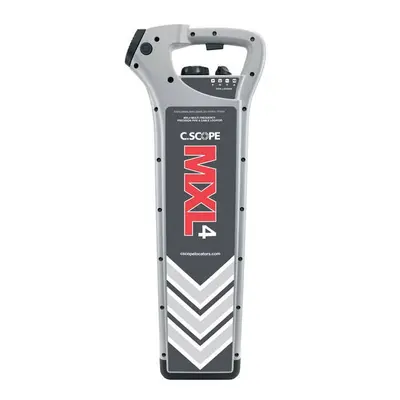
C.Scope MXL4-D | Multi-Frequency Precision Locator | Data Logging & Utility Avoidance
Checking price and quote options
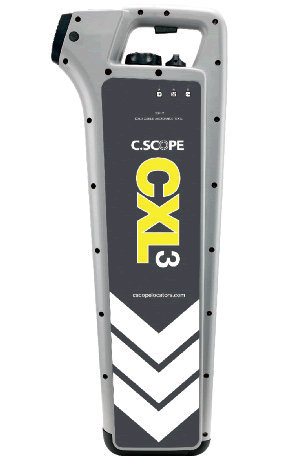
C.Scope CXL3 Cable Avoidance Tool | Multi-Mode Utility Locator | Safe Excavation Precision
Checking price and quote options
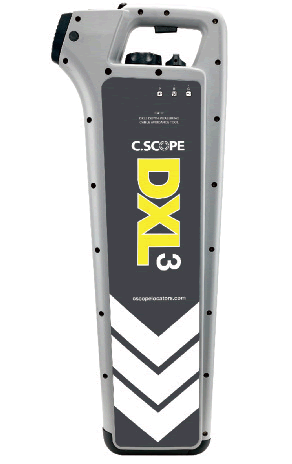
C.Scope DXL3 | Cable Avoidance Tool with Depth Measurement | Industrial Grade Detection
Checking price and quote options
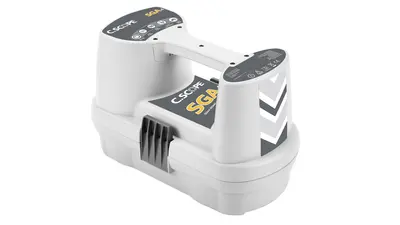
C.Scope SGA4 Signal Generator | Dual-Frequency 33kHz & 131kHz | High-Power Utility Tracing
Checking price and quote options
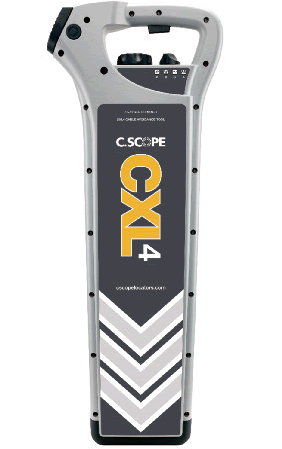
C.Scope CXL4 Dual-Frequency Cable Avoidance Tool
Checking price and quote options
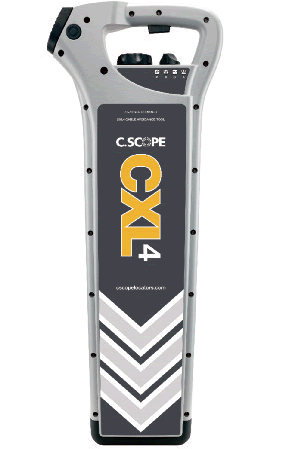
C.Scope CXL4-D Data Logging Cable Avoidance Tool
Checking price and quote options