
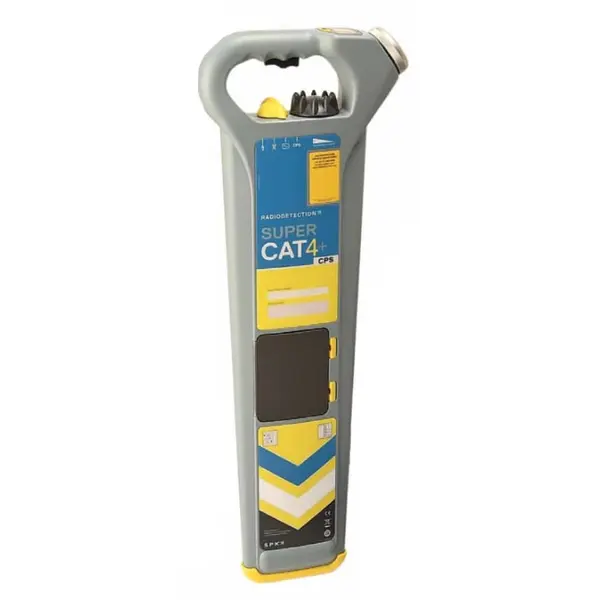
Radiodetection SuperCAT4+ CPS Pipeline Locator
The SuperCAT4+ CPS can follow a detectable cathodic protection signal on a metallic pipeline. It also supports 640 Hz, 8 kHz and 33 kHz active tracing.
What's in the Box
- 1 × Radiodetection SuperCAT4+ CPS locator in the selected display version
Trace protected metallic pipelines
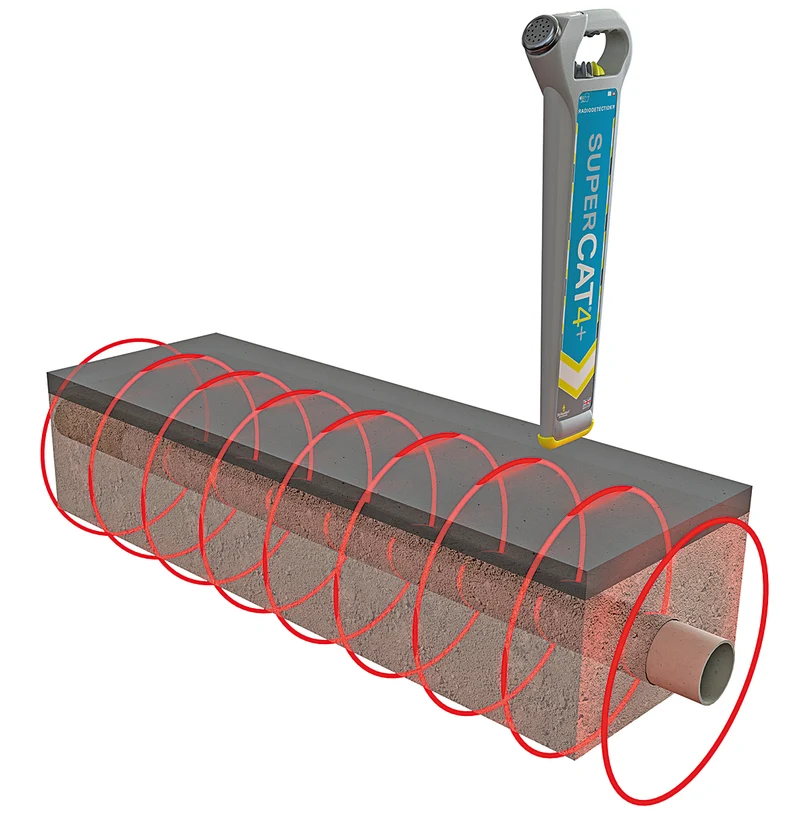
The SuperCAT4+ CPS can follow a detectable cathodic protection signal on a metallic pipeline. It also supports 640 Hz, 8 kHz and 33 kHz active tracing.
Choose the right signal for the job
CPS mode detects the signal from the cathodic protection system where a suitable rectified signal is present. The UK 50 Hz model has a 100 Hz CPS mode. Use the dedicated mode for the protected pipeline and use the site’s records and verification procedures.
When you need to apply a tracing signal instead, switch to Active Line and match the receiver and transmitter frequency. Power and Radio modes are also available for initial passive sweeps.
Build your locating kit
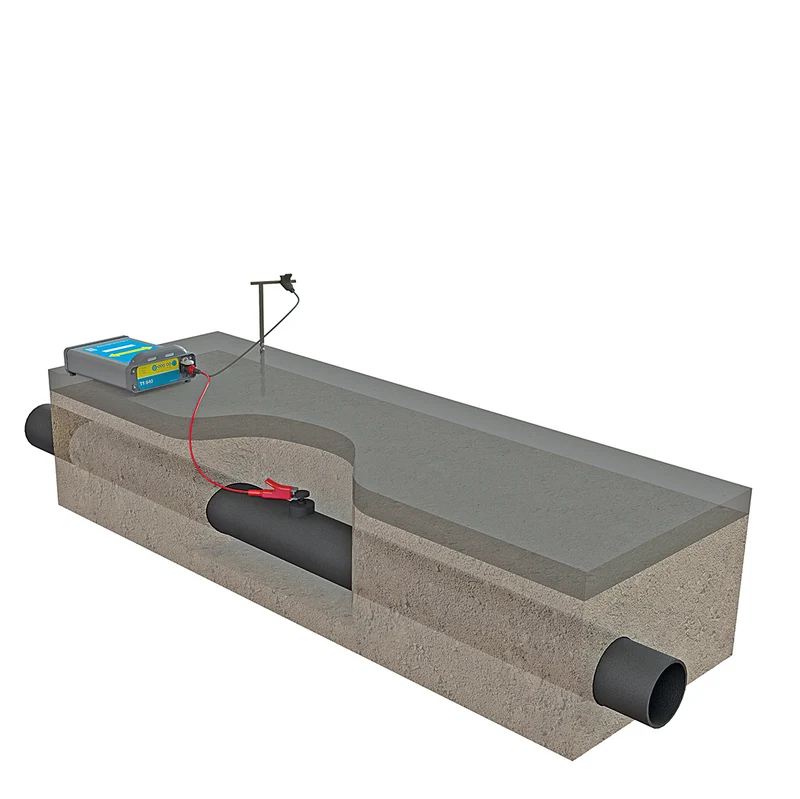
The T1-640 provides all three active line frequencies supported by this receiver by direct connection. Where direct access is unavailable, it can induce at 8 kHz or 33 kHz.
For sonde work, choose the SuperCAT4+ S or the standard SuperCAT4+ and match the required Sonde mode.
The receiver is supplied in your chosen depth-display version. For transport, add the SuperCAT carry bag.
For a side-by-side comparison, use the SuperCAT4+ and T1 buying guide.
UK model specifications
| CPS mode | 100 Hz on the UK 50 Hz version |
|---|---|
| Active Line | 640 Hz, 8 kHz and 33 kHz |
| Suggested transmitter for applied signals | T1-640 |
| Power and Radio | 50 Hz power response on the UK version and passive Radio mode |
| Depth display | Metric or imperial version selected when ordering |
| Power supply | 2 × LR20 alkaline D cells |
| Environmental protection | IP54 |
| Equipment weight | 2.3 kg with batteries |
Read depth and warnings in context
When the signal supports it, the depth reading estimates the distance to the centre of the conductor or sonde. Weak or distorted signals can prevent a useful reading. StrikeAlert warns of a possible shallow service in supported Power and Active Line modes.
Use service plans, a safe system of work and appropriate verification before excavation. Follow HSE HSG47 guidance. A depth reading alone is insufficient for deciding where mechanical excavation can take place.
Questions about this offer
Does CPS mode need a transmitter?
A suitable signal from the cathodic protection system is sufficient. A T1 is used when you need to apply a separate active signal.
Can I use the CPS receiver to trace a sonde?
For sonde work, select the SuperCAT4+ S or another receiver with the required Sonde mode.
What does 100 Hz describe?
It is the CPS detection frequency for the UK 50 Hz version. The separate Active Line modes receive 640 Hz, 8 kHz or 33 kHz.
Manufacturer documents
Use the SuperCAT4 and T1 user guide for controls, setup and the full frequency table. The brochure and applicable declaration of conformity are in the downloads above.
✦ Related Products
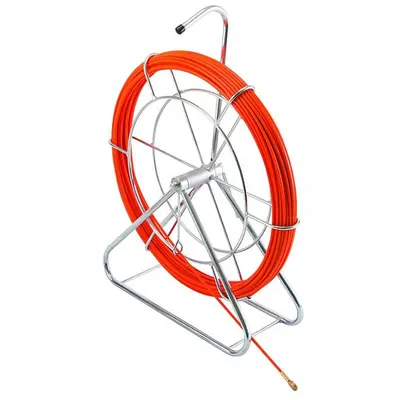
Radiodetection Flexrod | 9 mm × 60 m Duct Rod
Checking price and quote options
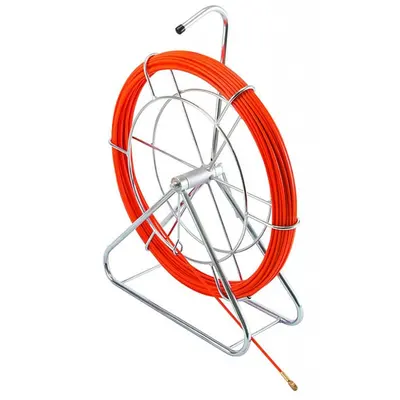
Radiodetection Flexrod | 9 mm × 120 m Duct Rod
Checking price and quote options
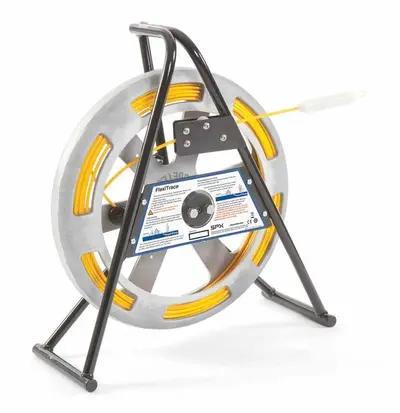
Radiodetection FlexiTrace 50 m | Traceable Pipe & Duct Rod
Checking price and quote options
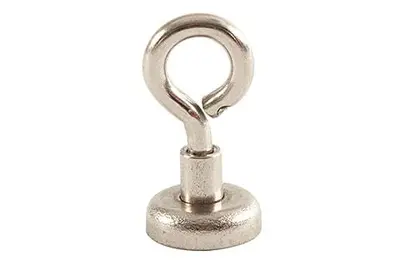
Radiodetection High Strength Neodymium Magnet | M4 Eyebolt | Pipe Connection Tool
Checking price and quote options
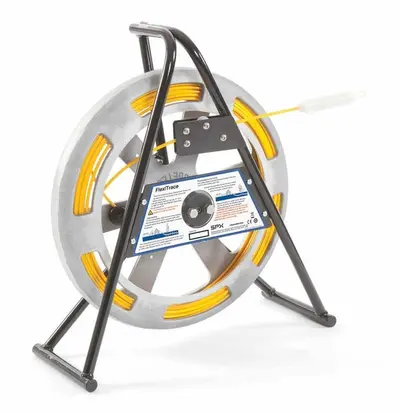
Radiodetection FlexiTrace 80 m | Traceable Pipe & Duct Rod
Checking price and quote options
Radiodetection 3/4" (19mm) Lockfast Connector | 10 BSW Thread Adapter | Secure Rod Interfacing
Checking price and quote options