
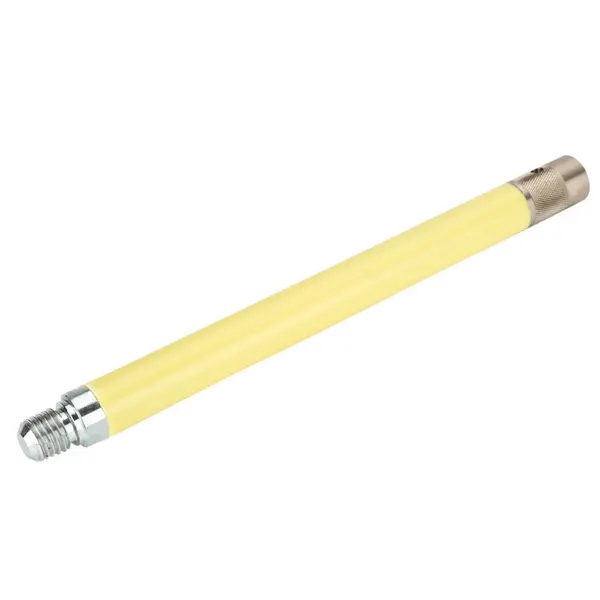
C.Scope BT Rodding Oscillator | 33 kHz Sonde for Narrow Ducts
The C.Scope BT Rodding Oscillator (YIRRO-33) is a 33 kHz sonde designed for use with BT duct rods in narrow non-metallic cable ducts and pipes. A compatible receiver locates the sonde from above ground as you move it along the duct. Condition: New.
Follow the duct one point at a time
The sonde provides a signal from inside a non-metallic duct. A compatible receiver locates the transmitter, not the duct wall. Advance the rod and take readings at successive positions to follow the route. You can only trace as far as the assembly can pass and the receiver can detect the signal.
Check the rod fitting, clearance and receiver
The YIRRO-33 is designed for BT duct rods, but check the fitting on your specific rod before ordering. Check that the sonde and rod connection can pass through the narrowest section and any bends. For the receiver, confirm that your exact model can detect a 33 kHz sonde signal in the appropriate mode. If you also need a receiver, browse Cat & Genny locators and check the model specifications before choosing.
Compare C.Scope sonde options
Choose the BT Rodding Oscillator when BT duct rods are part of your setup. If you use a different insertion system, compare the C.Scope Duct Sonde for narrow ducts or the C.Scope 33 kHz General Purpose Sonde for broader non-metallic pipe work. A shared 33 kHz frequency does not establish that the sondes use the same fitting or will pass through the same bends.
Specifications
- Manufacturer
- C.Scope
- Part number
- YIRRO-33
- Transmit frequency
- 33 kHz
- Intended rod system
- BT duct rods
- Application
- Narrow non-metallic cable ducts and pipes
- Condition
- New
Will it work with my 33 kHz locator?
Check that your exact receiver model can detect a 33 kHz sonde in its supported operating mode. A 33 kHz marking on a separate signal generator does not confirm receiver compatibility.
Can it pinpoint a blockage?
It can help you mark the last position the sonde reached before it stopped. That reading locates the sonde; it does not tell you whether a blockage, a tight bend or a change in duct size stopped it.
Will it fit through my duct?
Check the smallest internal opening and the tightest bend against the sonde with its rod connection assembled. If clearance is tight, ask for the assembled dimensions and confirm your rod fitting before ordering.