
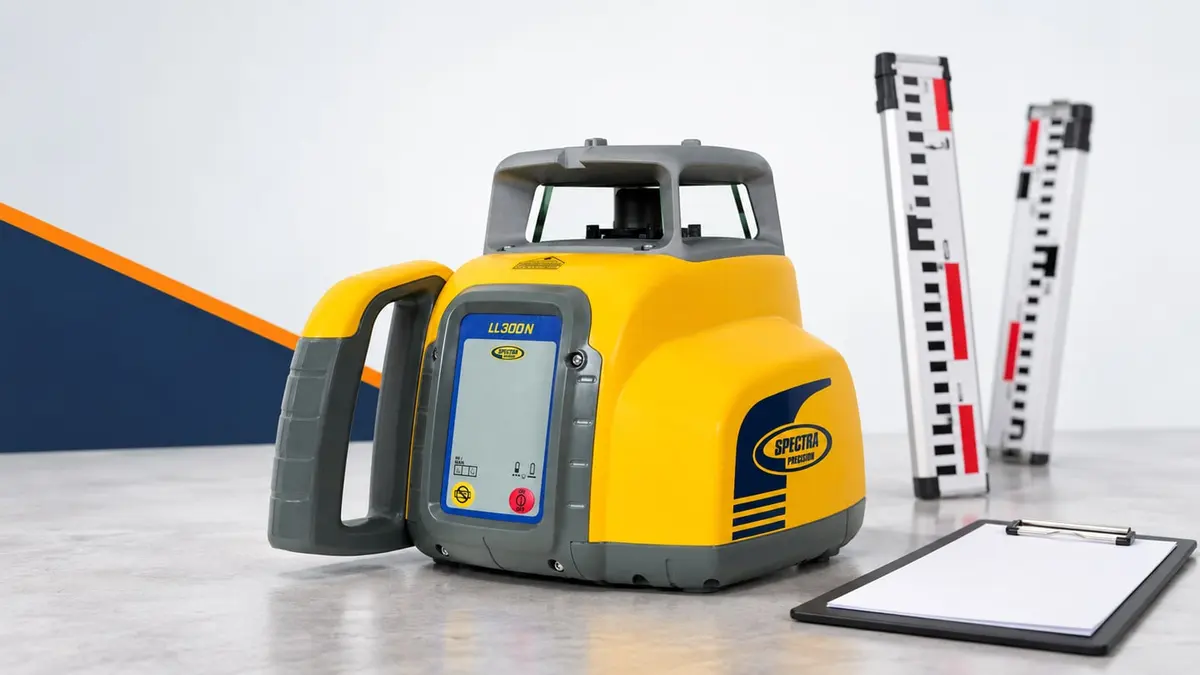
The Two-Peg Test: Checking a Laser Level
The two-peg test is a quick field check that confirms a laser level or optical level is reading true over distance. You take level readings between two points from two positions, compare the differences, and if they match within tolerance the instrument is accurate. It takes ten minutes, needs no special kit, and catches a miscalibrated level before it ruins a job.
Every surveyor and groundworker should know the two-peg test. It is the cheapest insurance against building in an error. Here is how to do it.
Why do a two-peg test?
A level that is out of calibration does not look broken; it just reads slightly wrong, and that error grows with distance. Set out a long drainage run or a slab with a level that is off by a few millimetres over 30 metres and you have built in a fault you will not see until it matters. The two-peg test reveals collimation error before you rely on the instrument.
How to do the two-peg test
- Set two pegs a known distance apart, say 30 to 60 metres, on firm ground (A and B).
- Position the instrument exactly midway between them. Take a staff reading on A and on B. The difference is the true height difference, because any instrument error affects both readings equally at equal distance.
- Move the instrument close to peg A (a metre or two away). Read A, then read B.
- Compare. Work out the apparent height difference from this second set-up. If it matches the midpoint difference within the instrument's tolerance, the level is good. If not, the error is the collimation error.
What tolerance is acceptable?
Check the manufacturer's stated accuracy, often given as millimetres per given distance. If your two-peg result falls inside that figure, carry on. If it exceeds it, the instrument needs adjustment or calibration before use. Do not "allow for it" mentally; correct it.
When should you run it?
- Before any critical setting-out or levelling job.
- After the instrument has been knocked, dropped or transported roughly.
- Periodically as routine, even if nothing seems wrong.
- After big temperature swings, which can shift a laser; see thermal drift.
The takeaway
A two-peg test is ten minutes that can save a rebuild. Make it routine before important work, and send the instrument for calibration if it fails. For how levels fit the bigger setting-out picture, see our site surveying precision guide, and browse levels and lasers.