
Drain Camera Push-Rod Care and Repair
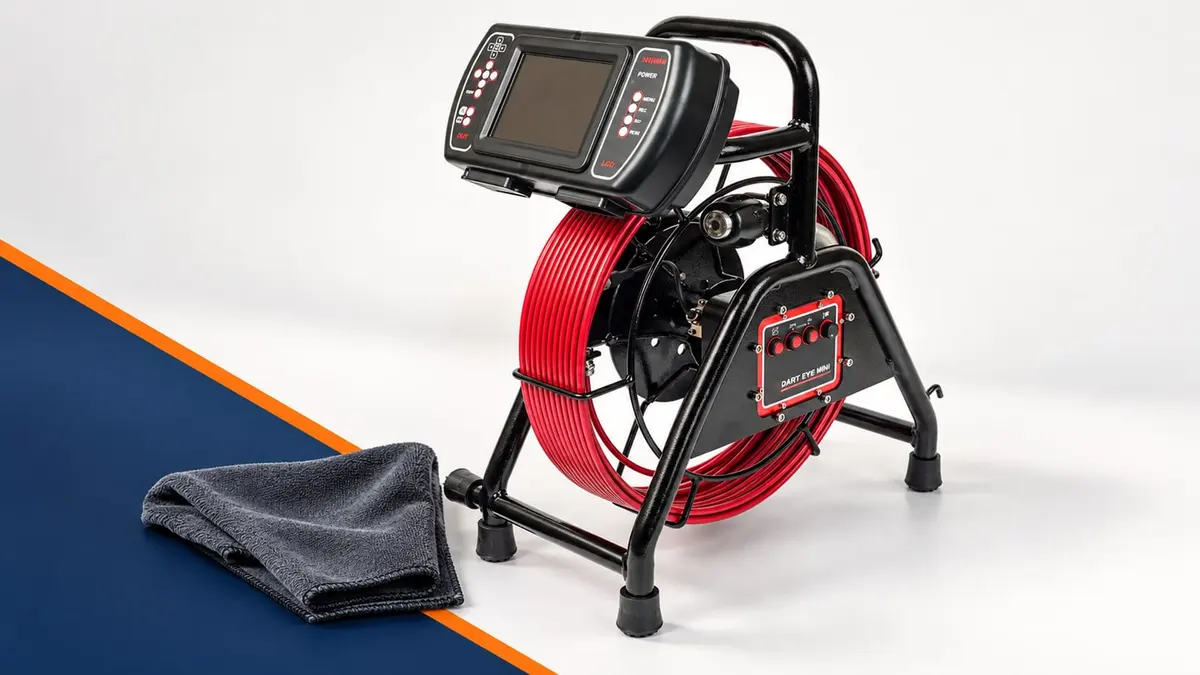
The push-rod is the part of a drain camera that wears out first. It takes the friction, the bends and the abuse of every survey. Most rod failures come from kinking, over-pushing round tight bends, and water getting into a damaged outer sheath. Look after the rod and store it correctly and a coiled push-rod will last years; abuse it and you will be repairing it within months.
Operators obsess over the camera head and forget the rod that delivers it. Here is how to keep yours alive and what to do when it is damaged.
Why does the push-rod fail?
A push-rod is a fibreglass core inside a tough outer jacket, engineered to be stiff enough to push yet flexible enough to follow a pipe. It fails when that balance is broken:
- Kinking: forcing the rod round a tight bend can crease the core, creating a permanent weak point.
- Sheath damage: abrasion or a nick lets water reach the core and the signal wires.
- Over-pushing: ramming a stuck camera buckles the rod and stresses the head connection.
How do you make a push-rod last?
- Do not force bends. If the camera stalls at a junction, ease back and try again rather than shoving harder.
- Feed smoothly. Let the rod do the work; jerky pushing concentrates stress.
- Rinse and inspect after each job. Wash off grit, then run the rod through your hand to feel for nicks or soft spots.
- Coil correctly. Store it on the reel without tight kinks; never leave it bent under tension.
- Mind the termination. The rod-to-head and rod-to-reel joints are common failure points; keep them clean and dry.
Can a damaged rod be repaired?
Often, yes. A push-rod can frequently be re-terminated or have a damaged section replaced rather than scrapping the whole reel, which is far cheaper than a new system. A spring assembly at the head end can also be replaced if it has taken a beating. If the core is kinked through, that section usually has to go. Talk to us about repairs and servicing before you write a reel off.
The takeaway
Treat the rod as the consumable it is: feed it gently, keep water out, store it without kinks, and inspect it routinely. It is the cheapest way to extend the life of an expensive system. For the full survey method see the professional drain CCTV handbook, and browse spares and systems in the drain camera range.