
The Professional Sewer & Drain CCTV Handbook (2026)
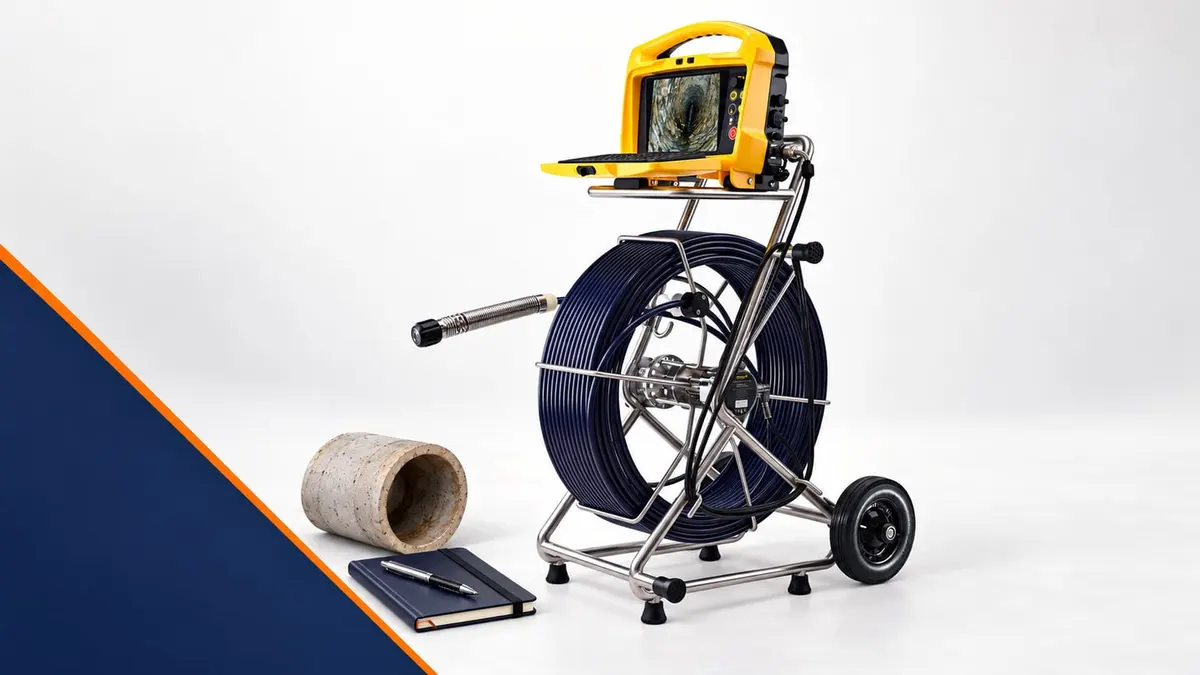
A professional drain survey uses a CCTV camera, a push camera for smaller pipes or a crawler for mainlines, to inspect a drain from the inside, record the condition, locate defects with an onboard sonde, and code what is found to the WRc standard. Done properly it tells a client exactly what is wrong, where, and how deep, before anyone digs.
This is the field guide we wish every new drainage operator had on day one: how the kit fits together, how to survey to standard, and how to choose a system that pays for itself.
Push camera or crawler: which do you need?
The pipe diameter decides:
- Push cameras handle 40mm to around 150mm: domestic drains, soil stacks, lateral connections. A flexible push-rod feeds the camera along the pipe. Ideal for plumbers and most commercial drainage work. See our drain camera range.
- Crawlers are motorised tractors for mainline sewers, typically 150mm and up. They carry a pan-and-tilt camera and travel long distances under their own power. Covered in our crawler inspection guide.
What makes a survey "professional" rather than a look down the pipe?
- Clear, recorded footage with a date, time and meterage overlay.
- Defect coding to the WRc Manual of Sewer Condition Classification, so the report is objective and comparable.
- Location of defects from the surface using the camera's sonde, so a repair can be dug in the right place first time.
- A written report the client can act on or hand to a buyer, insurer or water authority.
The coding is what separates a professional report from a video clip. More on that in our WRc coding guide.
How do you locate a defect for repair?
Every serious push camera and crawler carries a sonde in the head. When you reach a collapse, root intrusion or displaced joint, you stop, switch your locator to the sonde frequency, and pinpoint the head from the surface, getting both position and depth. That is how a repair crew digs one neat hole instead of guessing. The technique is set out in precision drain repair with sonde locating.
What specification actually matters?
| Feature | Why it matters |
|---|---|
| Daylight-readable screen | You survey outdoors; a dim screen is useless on site |
| Self-levelling camera head | Keeps the image upright so the footage reads correctly |
| Sonde in the head | Lets you locate defects for repair |
| Rugged push-rod and reel | The rod takes the abuse; durability decides lifespan |
| On-board recording and reporting | Produces the deliverable the client pays for |
Resolution matters less than people think; we explain why in 4K vs 1080p.
Buy or hire?
If drainage is core to your business, owning a system pays back quickly and a survey capability wins work. For occasional jobs, drain camera hire and CCTV drain survey rental give you professional kit without the outlay. Either way, choose the system around the pipes you actually survey, and learn to code what you see. Compare the two leading systems in Vivax vs Pearpoint.
Drain Camera FAQs
What is a drain camera?
A drain camera (also called a drain CCTV or pipe inspection camera) is a waterproof camera on a push-rod or a motorised crawler that inspects the inside of a drain or sewer, records its condition and locates defects using an onboard sonde.
How much does a drain camera cost?
Compact fixed push-rod systems start from around £850; self-levelling HD push systems run to £5,000+; motorised crawlers for mainline sewers cost more again. Prefer to try before you buy? See our drain camera hire rates. Browse the full drain camera range.
Push camera or crawler — which do I need?
Push cameras suit 40–150mm domestic and commercial drains; crawlers are motorised for 150mm+ mainline sewers. Most plumbers and drainage firms start with a push system.
Do I need 4K or is 1080p enough for a drain camera?
1080p is sufficient for most surveys; 4K helps on large-diameter pipes and detailed condition reports. See our 4K vs 1080p guide.
Can I hire a drain camera instead of buying?
Yes — drain camera hire suits one-off surveys and covers busy periods. See our drain camera hire rates, or buy new or refurbished from our drain camera range.