
Advanced Sonde Tracing: Plastic, Asbestos & 512Hz
To trace a non-metallic pipe or drain, you feed a sonde (a small battery-powered transmitter) into it and locate the sonde from the surface with your CAT set to the matching frequency. For deep utilities a 33kHz sonde carries furthest; for shallow drains and tight bends a 512Hz sonde is the standard choice. This is how you find the plastic and clay services a CAT cannot detect directly.
Sonde tracing is the technique that fills the biggest gap in cable avoidance: the non-metallic services. Here is how to do it well.
What is a sonde and how does it work?
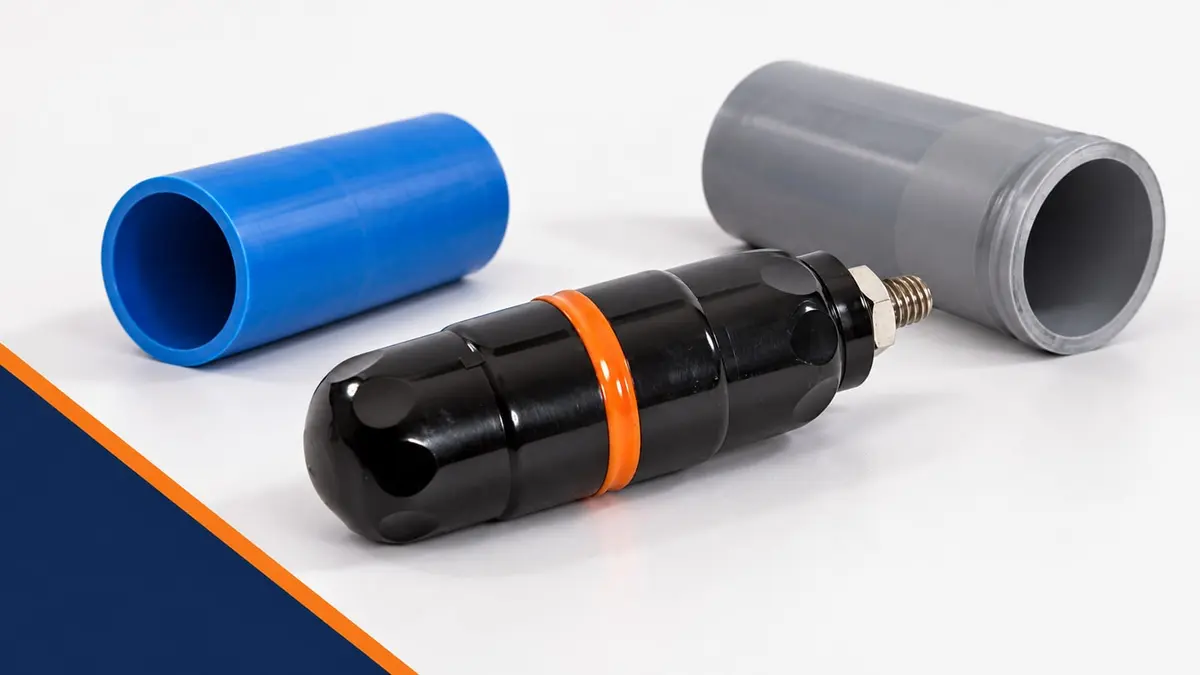
A sonde is a self-contained transmitter, often the size of a marker pen, that broadcasts a fixed-frequency signal. You attach it to a drain rod, push-rod or flexitrace, feed it into the pipe, and then locate its position and depth from above with the CAT. Because the sonde provides the signal, the pipe material no longer matters; you are locating the transmitter, not the pipe.
Which frequency: 512Hz, 8kHz or 33kHz?
| Frequency | Best for | Trade-off |
|---|---|---|
| 512Hz | Shallow drains, sewers, tight bends | Shorter range, but cuts through cast iron and survives bends |
| 8kHz | General-purpose pipe and duct tracing | A balance of range and resolution |
| 33kHz | Deeper utilities, longer runs | Best depth, but more affected by congestion |
The rule of thumb: lower frequencies travel through metal pipe walls and around bends; higher frequencies reach greater depth in open ground. Match the sonde to the job.
Tracing asbestos cement and plastic pipes
Asbestos cement (AC) water mains and plastic pipes are common, non-metallic and invisible to a passive CAT. A sonde pushed through them, or a traceable rod, makes them locatable. With AC pipe especially, locating accurately before excavation is not just convenient, it reduces the risk of disturbing a hazardous material blind.
Getting a clean trace
- Confirm the sonde frequency matches the CAT setting before you start.
- Locate the sonde at intervals as you push, not just at the end, to map the route.
- Take depth readings over the sonde to plan a safe dig.
- Check the sonde battery; a weak sonde gives a weak, misleading signal.
Sonde tracing turns "we cannot find it" into "here it is, this deep". Pair it with the rest of your method in the 2026 ultimate guide to cable avoidance, see it applied to drainage in precision drain repair, and browse sondes and tracing accessories.