
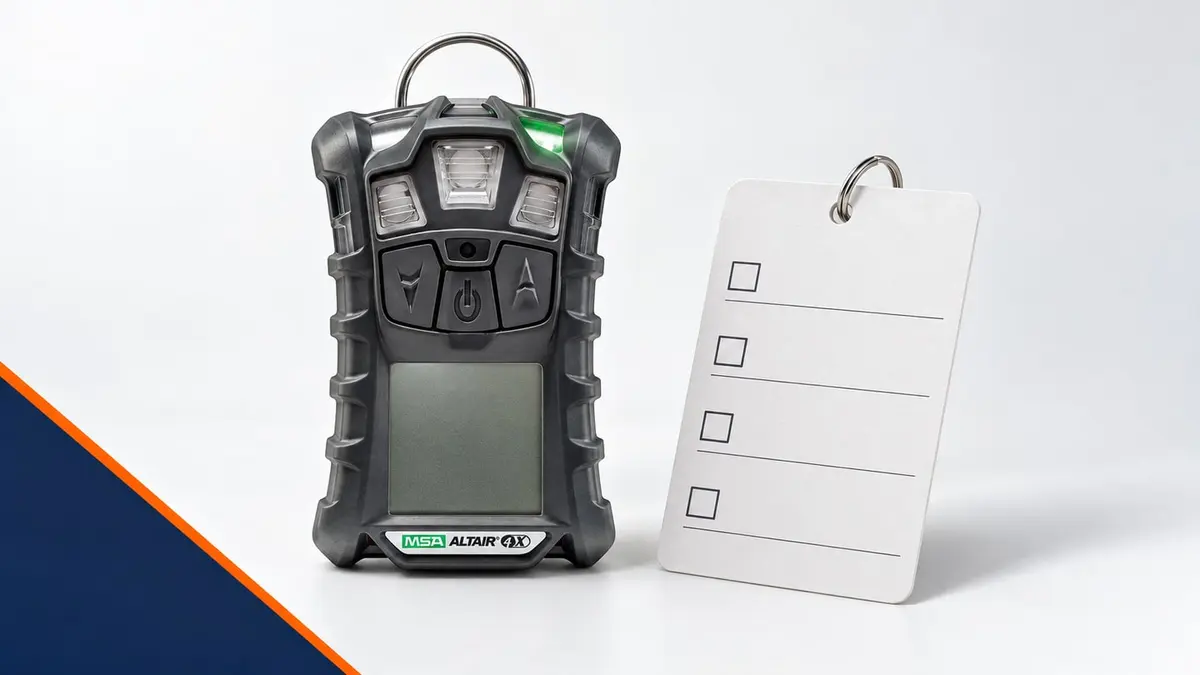
4-Gas Monitors: H2S, CO, LEL and Oxygen
A 4-gas monitor checks the four atmospheric hazards that cause most confined space deaths: oxygen (O2), flammable gas (LEL), carbon monoxide (CO) and hydrogen sulphide (H2S). It alarms when any reading moves outside safe limits, before you can sense the danger yourself. For confined space and many utility jobs, a calibrated, bump-tested 4-gas monitor is the minimum.
The "4 gases" are not arbitrary; they are the killers you cannot reliably smell or see in time. Here is what each one is and why it is on the list.
The four gases, and why they matter
| Gas | The danger | Typical alarm |
|---|---|---|
| Oxygen (O2) | Too little and you lose consciousness; too much and the fire risk soars | Low ~19.5%, high ~23.5% |
| Flammable (LEL) | Explosive atmosphere from methane and other gases | Around 10% LEL |
| Carbon monoxide (CO) | Toxic, odourless; starves the blood of oxygen | ~30 ppm |
| Hydrogen sulphide (H2S) | Toxic; "rotten eggs" at low levels, then deadens your sense of smell | ~5-10 ppm |
Exact alarm levels follow your risk assessment and workplace exposure limits, but these are the typical set points.
Why you cannot rely on your senses
Oxygen depletion gives no warning at all. CO is completely odourless. H2S is notorious for deadening your sense of smell at exactly the concentrations that become dangerous, so "I can't smell it any more" can mean it is getting worse, not better. A monitor reacts to all four before your body does.
How to use a 4-gas monitor properly
- Bump test daily to confirm the sensors and alarms respond; see the bump-test guide.
- Calibrate on schedule so readings stay accurate over time.
- Pre-entry test the atmosphere from the surface, ideally with a sampling pump and probe, before anyone enters.
- Monitor continuously while work goes on; conditions change.
- Act on alarms immediately: evacuate, do not investigate.
Diffusion or pump?
A diffusion monitor samples the air around it and suits a worker inside the space. A pumped monitor draws a sample through a probe, which is what you want to test a chamber from the top before entry. Many jobs need both capabilities. Browse options via gas detection hire.
The takeaway
A 4-gas monitor is the cornerstone of safe entry, but only when it is bump-tested, calibrated and acted on. Pair it with escape and rescue provision from the confined space entry guide, and browse gas detection and confined space kit.