
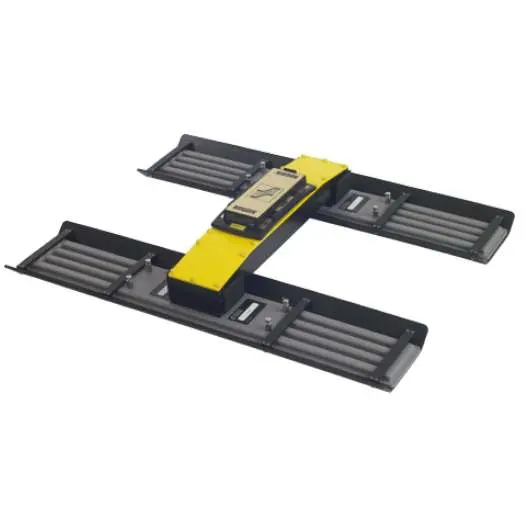
Radiodetection Noggin Ultra 100 Unit | 100 MHz GPR Sensor | Deep Subsurface Mapping
The Radiodetection Noggin Ultra 100 Unit is a specialized ground penetrating radar sensor engineered to overcome the limitations of standard subsurface mapping tools. By employing a 100 MHz center frequency, this unit achieves significantly greater depth penetration while maintaining high signal integrity through advanced signal-to-noise processing.
What are the primary benefits of the 100 MHz frequency?
The 100 MHz center frequency is optimized for deep subsurface mapping, providing the energy necessary to penetrate deep into the ground where higher frequency units lose resolution. This frequency is essential for identifying large-scale features and geological structures that reside far below the surface.
How does the sensor handle weak GPR signals?
This unit is designed with a superior signal-to-noise ratio, allowing it to isolate and identify faint reflections that standard GPR sensors might miss. This capability ensures that surveyors receive high-quality, actionable data even in the most difficult and attenuative soil conditions.
In what environments is the Noggin Ultra 100 Unit most effective?
The Noggin Ultra 100 is most effective in demanding survey conditions that require maximum depth and the detection of subtle subsurface changes. It is the preferred choice for mapping projects where deep utility identification or geological profiling is the primary objective.
| Manufacturer | Radiodetection |
| Model | Noggin Ultra 100 Unit |
| Center Frequency | 100 MHz |
| Signal Ratio | Superior Signal-to-Noise Ratio |
| Application | Deep Subsurface Mapping |
- Noggin Display (DVL-500) for real-time data visualization and analysis.
- DVL to Noggin SmartCart Cable with Latches for secure system connectivity.
- pulseEKKO/Noggin 100 SmartCart GPS Mount for integrated location tracking.
- Noggin Spare Parts Kit for maintenance and field uptime.